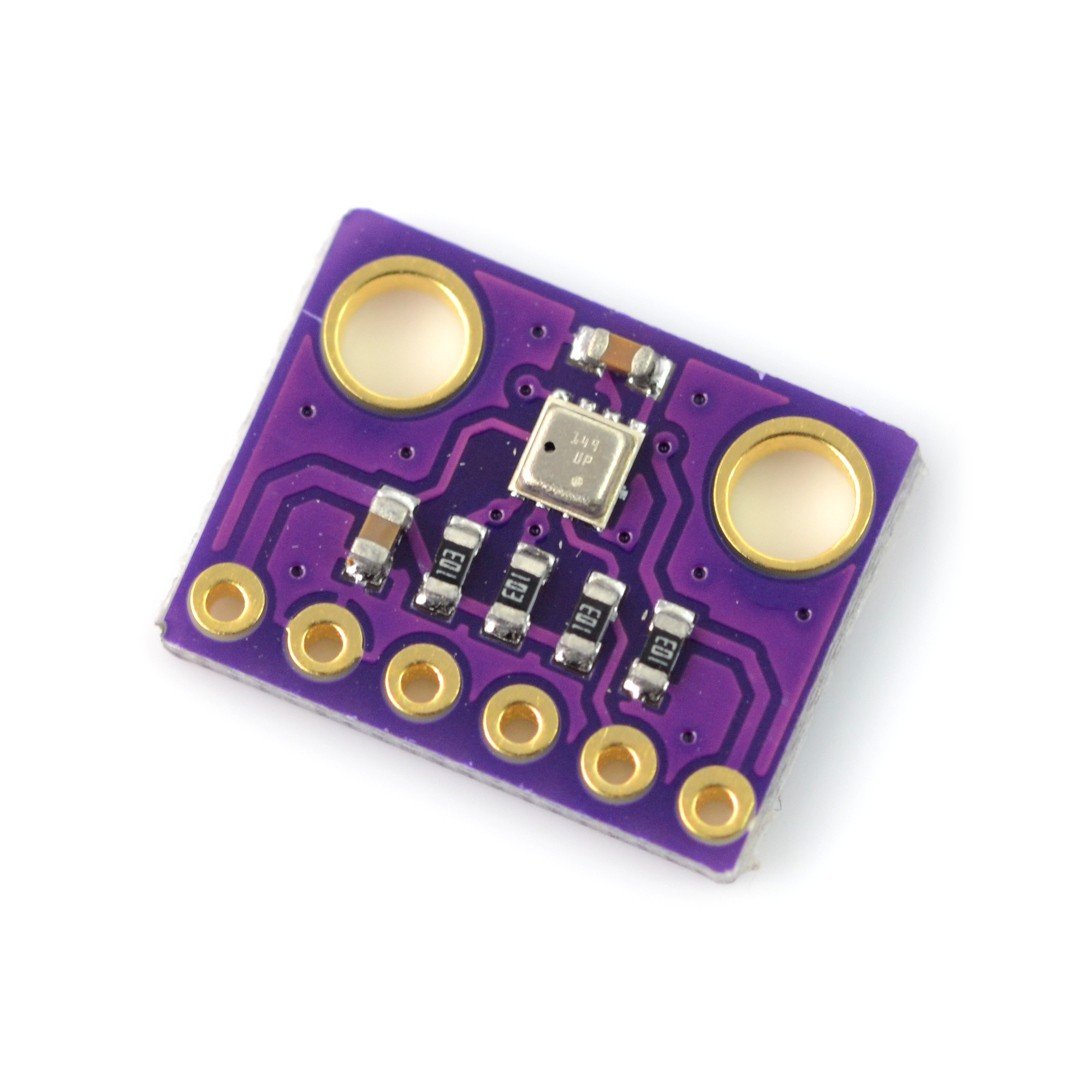
The BME280 sensor is one of the best sensors on the market, although it is not without its drawbacks, the most important of which are: a) very complicated calculations that need to be done to convert raw readings into final results, b) lack of series keeping by the manufacturer with different results of sensors of the same type or similar (BMP), exceeding the assumed measurement error, c) low resistance to electromagnetic and/or electrical interference, especially in the case of atmospheric pressure and temperature.
However, despite the disadvantages described above, the sensor still stands out positively from the competition in terms of (after all) measurement accuracy, including out-of-range operation from the official data sheet. Low power consumption allows it to be used in battery-powered devices.
Czujnik BME280 to jeden z lepszych czujników na rynku, choć nie jest pozbawiony wad, z których najważniejsze to: a) bardzo skomplikowane obliczenia które należy wykonać aby surowe odczyty przekształcić w wyniki końcowe, b) brak trzymania serii przez producenta odznaczający się różnymi wynikami czujników tego samego typu lub podobnego (BMP), wykraczające poza założony błąd pomiaru, c) niska odporność na zakłócenia elektromagnetyczne i/lub elektryczne, szczególnie w przypadku ciśnienia atmosferycznego i temperatury.
Jednak mimo opisanych powyżej wad, czujnik i tak pozytywnie odznacza się na tle konkurencji pod kątem (mimo wszystko) dokładności pomiarów, w tym pracy poza zakresem z oficjalnej karty katalogowej. Niski pobór prądu umożliwia zastosowanie go w urządzeniach zasilanych bateryjnie.







 4.9
4.9